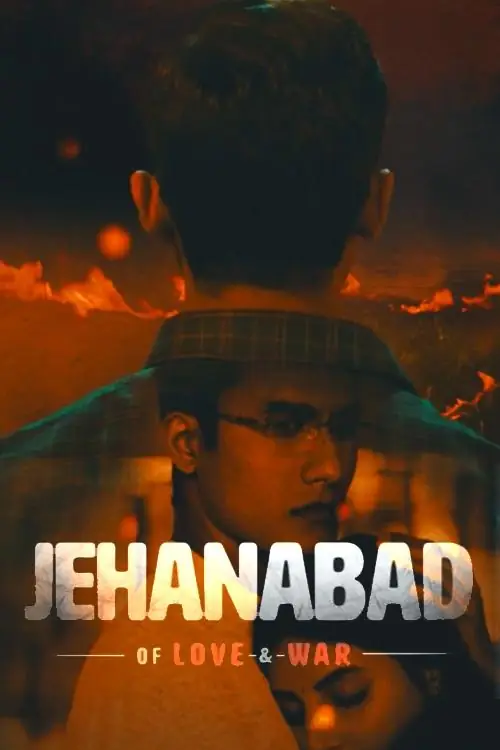
Jehanabad is one of those small towns where everyone knows everyone else's business before they've even finished doing it. It's the kind of place where gossip travels faster than the internet and secrets have a shelf life shorter than milk in summer. And in this particular town, two very different forces are brewing simultaneously, like two storms on a collision course that nobody in the forecast department bothered to mention. On one side, you've got innocent love blossoming between a young, independent college student and her professor—a connection so tender and hopeful that it practically has a target painted on it, because nothing pure survives contact with reality unchanged.
On the other side, violence is rolling into town with the confidence of someone who knows nobody's going to stop it. A seasoned Naxal commander arrives, bringing with him the kind of intensity and ideology that turns quiet streets into battlegrounds. He's not here for pleasantries. He's here because this town sits at the intersection of power and grievance, and he intends to make something of that fact. Add to this volatile mix an ex-MLA with his eyes fixed firmly on the Dalit vote bank, sniffing around for political advantage like a shark that's caught the scent of opportunity, and you've got a recipe for upheaval that makes your average soap opera look like a children's puppet show.
The brilliance of this story lies in how these two worlds—the intimate and the explosive—are not separate at all. They're parallel tracks running through the same station, and it's only a matter of time before the trains collide. The young student and her professor are trying to build something private and gentle in a space that's being consumed by forces far beyond their control. Their love story isn't happening in a vacuum; it's happening in a town where power is being contested, loyalties are being tested, and the cost of being in the wrong place at the wrong time could be everything.
What makes Jehanabad compelling is that it refuses to treat love and violence as opposite ends of a spectrum. Instead, it shows them as two expressions of the same human intensity—the desire to possess, to protect, to claim something as yours. The professor and the student are fighting for the right to love each other in a world that has opinions about who belongs with whom. The Naxal commander and the ex-MLA are fighting for power, for ideology, for control. The stakes are different, but the fuel is the same: conviction. And when these worlds inevitably cross paths, the collision doesn't just change the people involved—it transforms the town itself into a character caught between tenderness and brutality, trying to figure out which one will write its final chapter.
Discover the Full Story →